Most matting is not caused by neglect in any dramatic sense. It is caused by the wrong brush, used the wrong way, for a few cheerful minutes a week. A slicker skimmed over the top of a thick coat makes the surface look smooth while the hair at the skin quietly felts together, and the owner discovers it weeks later at the grooming table.
The fix is matching the tool to the coat and learning one technique, line brushing, that works on almost every coat type. Seasons matter too in Monroe: spring and fall sheds, summer swimming, and winter static each change what your brushing session needs to accomplish.
The four tools and what each is really for
A slicker brush, with its bed of fine angled wires, is the workhorse for removing loose hair and working out tangles in medium and long coats. A pin brush, with rounded-tip pins on a cushion, suits long silky coats and the finishing pass, and is gentler for dogs that dislike the slicker's feel. A metal comb is not optional equipment; it is the inspection tool that tells you whether brushing actually worked, because a comb that reaches the skin and glides out proves the coat is clear.
For double coats, an undercoat rake pulls loose undercoat from beneath the guard hairs during shed season. Rubber curry brushes are the whole kit for short coats, loosening dead hair and distributing skin oils during a bath or a dry session. Dematting tools exist, but they cut as much as they separate, and most owners are better served by a comb, patience, and knowing when a mat is a groomer's job.
Using two of these in sequence, brush then comb, is the entire system. The brush does the work and the comb grades it. Owners who skip the comb are flying without instruments.
Line brushing: the five-minute routine
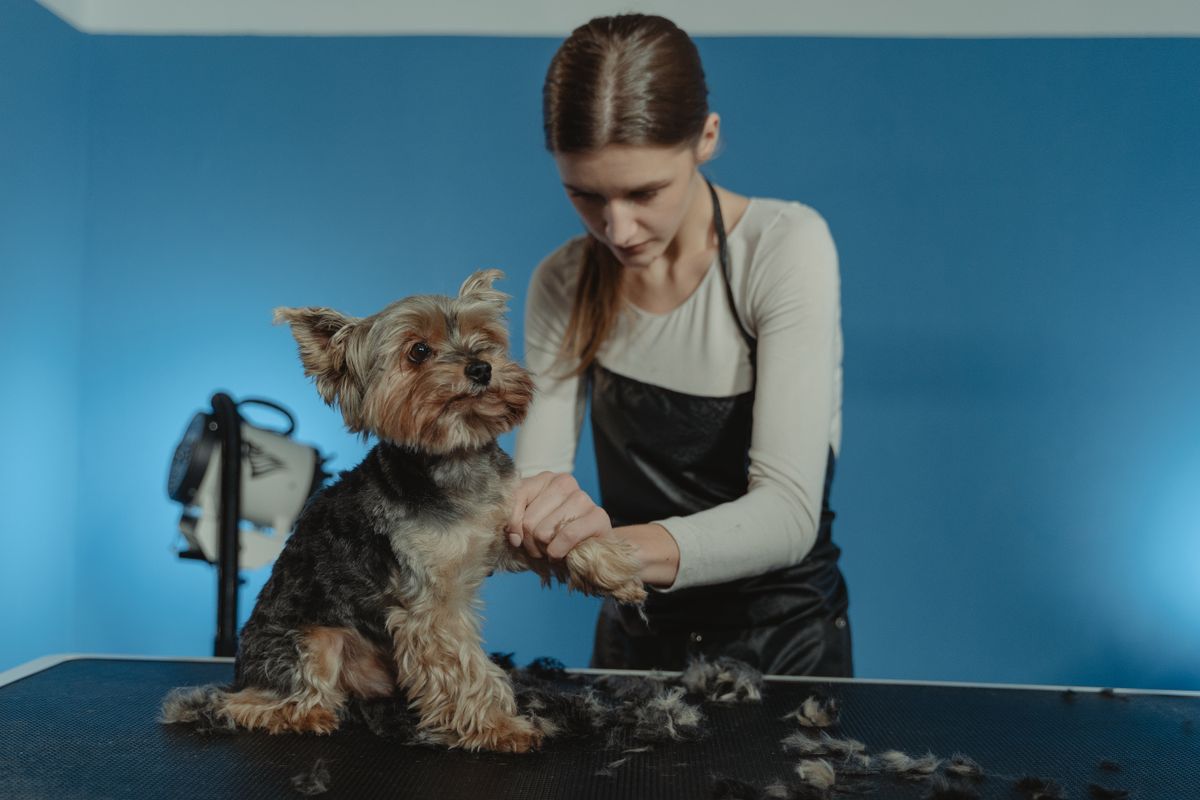
Work in a pattern so no area is missed: one side, then the other, then chest, belly, legs, and tail. Lift a section of coat with one hand so you can see the skin, brush the exposed layer in short strokes from the skin outward, then let down the next layer and repeat. That layering is the line in line brushing, and it is what separates real brushing from surface skimming.
Spend your time where mats actually start: behind the ears, in the armpits, where the collar sits, the backs of the legs, and the tail base. Friction and moisture collect in those spots. Five focused minutes three times a week beats a half hour once a month for every coat that grows, because tangles are easy in their first days and stubborn by their second week.
End with the comb test in those same friction zones. If the comb stops, you found tomorrow's mat today, while it can still be teased apart with fingers and a slicker. That small habit is most of what professional groomers wish they could install in every home.
Adjusting by season
Use the checklist below as the year turns. The routine stays the same; the emphasis moves.
Seasonal brushing checklist
- Spring shed: add the undercoat rake for double coats and brush more often for two to four weeks while the winter coat releases
- Pollen season: wipe the coat down after walks; Piedmont pollen clings to long hair and tracks indoors on feet and bellies
- Summer: brush before and after swimming, and dry the coat fully; damp, unbrushed coats mat faster than any other kind
- Fall shed: repeat the spring push as the summer coat makes way for winter growth, and check for burrs and seeds after every field or trail walk
- Winter: watch static and dry skin on indoor-heated dogs; a light leave-in conditioning spray made for dogs makes brushing gentler
- All year: comb-test the friction zones (behind ears, armpits, collar line, leg backs) at least weekly on growing coats
When home brushing has hit its limit
A mat that will not yield to fingers and a comb, sits tight against the skin, or makes the dog flinch is no longer a home project. Pulling it out hurts and can tear skin, and shaving under it safely takes a groomer's clipper and a steady hand. Bringing the dog in early, to a salon like Doggie Depot, usually saves most of the coat; waiting until the mats join up is what turns a brush-out into a shave-down.
The same goes for your own limits. If your dog fights the brush hard enough that sessions end in a wrestling match, ask a groomer to watch your technique once. A different grip, tool, or treat rhythm often fixes the fight in a single visit.
Common questions
How hard should I press with a slicker brush?
Lightly. Let the wires do the work in short strokes and keep the brush moving; pressing and dragging causes brush burn, a real skin irritation. If the skin pinks up, you are pressing too hard or staying too long in one spot.
My dog only tolerates brushing for a minute. Is that worth anything?
Yes. Do one section per session on a rotation, pair it with treats, and stop while it is still going well. A minute a day across a week covers the whole dog and builds tolerance at the same time.
Do short-haired dogs need brushing at all?
A weekly pass with a rubber curry removes loose hair, spreads skin oils, and gives you a hands-on health check for lumps, ticks, and sore spots. It is five minutes well spent even without tangles to fight.
Photos in this guide are representative stock images.
← All guides from Doggie Depot← Back to Doggie Depot